Peer Review Policy

Annales Medicinae Urgentis is a peer-reviewed scientific journal dedicated to publishing high-quality scholarly work in emergency medicine and related fields. All manuscripts submitted to the journal undergo editorial assessment and, when suitable for further consideration, external peer review before a final editorial decision is made.

Type of peer review

Annales Medicinae Urgentis uses a double-anonymous peer review process. The identities of authors are concealed from reviewers, and the identities of reviewers are concealed from authors.

Authors are expected to prepare their manuscripts in a way that does not reveal their identity in the main manuscript file. Information that may identify the authors, including names, affiliations, acknowledgements, funding details, ethics approvals, and conflicts of interest, should be provided separately where required by the submission system.

Initial editorial assessment

All submitted manuscripts are first assessed by the Editor-in-Chief, Deputy Editor, or a designated Section Editor. At this stage, the manuscript is checked for:

  • relevance to the journal’s scope;
  • compliance with the journal’s author guidelines;
  • originality and scientific or educational value;
  • ethical approval and patient consent, where applicable;
  • completeness of required declarations;
  • potential plagiarism, duplicate publication, or other research integrity concerns;
  • suitability for peer review.

Manuscripts that are outside the journal’s scope, do not meet basic scientific or editorial standards, lack essential ethical documentation, or are otherwise unsuitable may be rejected without external peer review.

Reviewer selection

Manuscripts selected for peer review are sent to at least two independent reviewers with appropriate expertise in the subject area, methodology, or clinical field of the manuscript.

Reviewers are selected by the editorial team based on their expertise, experience, independence, and absence of relevant conflicts of interest. Reviewers may be external experts or members of the Editorial Board, provided that they are independent from the authors and the submitted work.

The journal may invite additional reviewers when needed, including statistical, methodological, ethical, or subject-specific reviewers. If the initial reviews are substantially divergent, the editor may request an additional review before making a decision.

Conflicts of interest

Editors and reviewers must declare any potential conflict of interest before handling or reviewing a manuscript.

A conflict of interest may include, but is not limited to:

  • recent or ongoing collaboration with the authors;
  • employment at the same institution or department;
  • personal, academic, or professional relationships that could influence judgment;
  • financial interests related to the manuscript topic;
  • direct competition or intellectual conflict;
  • involvement in the preparation of the submitted manuscript.

Editors or reviewers with a relevant conflict of interest must recuse themselves from the review or decision-making process.

Confidentiality

All submitted manuscripts are confidential documents. Editors, reviewers, and editorial staff must not share, discuss, copy, or use unpublished manuscript material for personal, professional, or research purposes.

Reviewers must not disclose the content of the manuscript or their review to third parties without permission from the editorial office. If a reviewer wishes to consult a colleague or trainee, this must be approved by the editor in advance, and the additional person must also agree to confidentiality and conflict-of-interest requirements.

Reviewer responsibilities

Reviewers are expected to provide objective, constructive, respectful, and evidence-based feedback. Reviews should help editors make an informed decision and help authors improve the quality, clarity, and reliability of their work.

Reviewers are asked to evaluate, where applicable:

  • originality and relevance of the manuscript;
  • clarity of the research question or objective;
  • appropriateness of study design and methodology;
  • adequacy of statistical analysis;
  • ethical conduct of the study;
  • validity of results and conclusions;
  • relevance and completeness of references;
  • quality of presentation, structure, tables, and figures;
  • clinical, scientific, educational, or public health importance.

Reviewers should identify major limitations, unsupported claims, ethical concerns, possible plagiarism, duplicate publication, data fabrication or falsification, image manipulation, undeclared conflicts of interest, or other integrity concerns if suspected.

Reviewers must not use confidential information obtained through peer review for personal advantage or to disadvantage others.

Use of artificial intelligence and automated tools in peer review

Reviewers and editors must not upload submitted manuscripts, figures, tables, supplementary materials, or unpublished data to publicly available generative artificial intelligence tools or other external automated platforms, as this may breach confidentiality.

Reviewers must not use generative artificial intelligence tools to generate peer review reports, editorial recommendations, or scientific judgments. Responsibility for the content, accuracy, tone, and conclusions of the review remains entirely with the reviewer.

Limited use of automated tools for language correction or formatting of the reviewer’s own text may be acceptable, provided that no confidential manuscript content is shared with external systems and that such use does not replace the reviewer’s own critical assessment.

Editorial decisions

After receiving reviewer reports, the handling editor evaluates the manuscript, reviewer comments, and any additional editorial considerations before making a recommendation or decision.

Possible editorial decisions include:

  • accept;
  • minor revision;
  • major revision;
  • reject and invite resubmission;

The final decision is made by the Editor-in-Chief, Deputy Editor, or designated handling editor. Editorial decisions are based on the manuscript’s scientific quality, originality, methodological soundness, ethical compliance, relevance to the journal, and the recommendations of reviewers.

The editor is not required to follow reviewer recommendations if there are justified editorial, ethical, methodological, or scientific reasons for a different decision.

Revisions

When revision is requested, authors should submit a revised manuscript together with a detailed response to reviewers. The response should address each reviewer and editorial comment point by point and clearly indicate changes made in the manuscript.

Revised manuscripts may be assessed by the handling editor alone or returned to the original reviewers or additional reviewers, depending on the extent of the revisions and the nature of the concerns raised.

Failure to adequately address reviewer or editorial comments may result in rejection.

Manuscripts submitted by editors or editorial board members

Manuscripts submitted by the Editor-in-Chief, editors, editorial board members, reviewers, or individuals closely associated with the journal are handled with additional safeguards to ensure editorial independence.

Such manuscripts are assigned to an independent editor who has no conflict of interest with the authors or the work. The submitting editor or editorial board member is excluded from all stages of editorial handling, reviewer selection, decision-making, and access to confidential review information related to the manuscript.

These manuscripts undergo the same double-anonymous peer review process as all other submissions.

Annales Medicinae Urgentis monitors the proportion of published research articles authored by editors, editorial board members, or reviewers and seeks to minimise editorial endogeny.

Special issues and supplements

Manuscripts submitted for special issues, thematic sections, conference supplements, or sponsored supplements are subject to the same editorial standards, ethical requirements, and peer review process as regular submissions.

Guest editors, if appointed, must follow the journal’s editorial and peer review policies. Final responsibility for editorial standards and publication decisions remains with the journal’s Editor-in-Chief or designated senior editor.

Supplementary material

Supplementary material that is essential for understanding, verifying, or reproducing the work may be included in the peer review process. Editors may request that reviewers assess supplementary files, datasets, images, checklists, or other supporting material when relevant.

Research integrity checks

Peer review does not replace editorial checks for research integrity. The journal may use plagiarism detection software, reference checks, image checks, statistical review, ethics documentation review, or other editorial procedures when appropriate.

If concerns arise before, during, or after peer review, the editorial team may request additional information, raw data, ethics documentation, patient consent forms, trial registration details, or institutional confirmation from the authors.

Appeals and complaints

Authors may appeal an editorial decision if they believe that a significant procedural error, factual misunderstanding, or conflict of interest affected the outcome.

Appeals must be submitted in writing to the editorial office and must include a clear explanation of the grounds for appeal. Appeals that simply disagree with reviewer or editorial judgment without new evidence will not usually be considered.

The journal will review appeals in a fair and timely manner. When appropriate, an independent editor or additional reviewer may be consulted. The decision after appeal is final.

Complaints about the peer review process, editorial conduct, reviewer conduct, or publication ethics should be submitted to the editorial office. The journal will investigate complaints according to principles of fairness, confidentiality, transparency, and publication ethics.

Post-publication issues

If significant errors, ethical concerns, or integrity issues are identified after publication, the journal may publish a correction, expression of concern, retraction, or other editorial notice, depending on the nature and severity of the issue.

The journal follows recognised standards of publication ethics when handling post-publication concerns.

Reviewer recognition

Reviewer identities are kept confidential unless explicit permission is given by the reviewer and the journal has approved disclosure. The journal may acknowledge the contribution of reviewers collectively, for example by publishing an annual list of reviewers, provided that this does not reveal the reviewers of individual manuscripts.

Editorial independence

Editorial decisions are made independently and are not influenced by the journal’s publisher, sponsors, advertisers, institutions, professional societies, or other external parties.

The acceptance or rejection of manuscripts is based solely on scholarly merit, ethical compliance, relevance to the journal, and the quality of the submitted work.

Publication Ethics / Publishing Policies (zasebna podstranica na amu.hr: About -> Publication Ethics / Publishing Policies)

Annales Medicinae Urgentis is committed to maintaining high standards of publication ethics, research integrity, editorial independence, transparency, and responsible scholarly communication.

The journal follows internationally recognised standards and recommendations for ethical publishing, including the principles of the Committee on Publication Ethics (COPE), the International Committee of Medical Journal Editors (ICMJE), and relevant standards for transparent open-access publishing.

These policies apply to all authors, editors, reviewers, editorial board members, guest editors, and all persons involved in the submission, review, editing, publication, and post-publication handling of manuscripts submitted to Annales Medicinae Urgentis.

Editorial responsibility and independence

Editorial decisions are based solely on the scholarly merit, originality, methodological quality, ethical compliance, relevance to the journal’s scope, and clinical, scientific, educational, or public health importance of the submitted work.

Editorial decisions are not influenced by the publisher, sponsors, advertisers, institutions, professional societies, personal relationships, political considerations, or commercial interests.

The Editor-in-Chief has final responsibility for the editorial content of the journal. When appropriate, editorial decisions may be delegated to deputy editors, section editors, or other designated editors, provided that editorial independence and conflict-of-interest safeguards are maintained.

Responsibilities of authors

Authors are responsible for ensuring that their submitted work is original, accurate, ethically conducted, transparently reported, and not under consideration elsewhere unless this has been clearly disclosed and approved by the editors.

By submitting a manuscript to Annales Medicinae Urgentis, authors confirm that:

  • the manuscript represents original work;
  • the manuscript has not been published previously, except where clearly disclosed;
  • the manuscript is not under simultaneous consideration by another journal;
  • all listed authors meet the journal’s authorship criteria;
  • all persons who contributed substantially but do not meet authorship criteria are appropriately acknowledged;
  • all sources of funding and support are disclosed;
  • all relevant conflicts of interest are disclosed;
  • research involving humans, animals, or sensitive data has been conducted in accordance with applicable ethical standards;
  • necessary ethics committee approvals, informed consent, patient consent, and institutional permissions have been obtained where applicable;
  • all data, images, tables, and figures are accurate and have not been fabricated, falsified, manipulated, or misleadingly presented;
  • permission has been obtained for any third-party material not covered by the article license.

Authors must cooperate with the editorial office during the review and post-publication process and provide additional documentation, data, ethics approvals, consent forms, or institutional confirmations if requested.

Authorship and contributorship

Annales Medicinae Urgentis follows the authorship principles of the International Committee of Medical Journal Editors.

Authorship should be limited to individuals who have made a substantial intellectual contribution to the work and who accept responsibility and accountability for the published article.

Each author should meet all of the following criteria:

  1. substantial contribution to the conception or design of the work, or the acquisition, analysis, or interpretation of data;
  2. drafting the work or critically revising it for important intellectual content;
  3. final approval of the version to be published;
  4. agreement to be accountable for all aspects of the work and to ensure that questions related to the accuracy or integrity of any part of the work are appropriately investigated and resolved.

Individuals who contributed to the work but do not meet authorship criteria should be acknowledged in the manuscript with their permission.

Examples of contributions that alone do not justify authorship include general supervision, administrative support, technical assistance, language editing, funding acquisition, data collection without intellectual contribution, or routine clinical care.

Author contribution statement

The journal may require authors to provide a clear author contribution statement describing the role of each author in the preparation of the manuscript.

The use of a recognised taxonomy, such as the CRediT taxonomy, is encouraged where appropriate.

Corresponding author

The corresponding author is responsible for communication with the journal during submission, peer review, production, and post-publication correspondence.

The corresponding author must ensure that:

  • all authors have approved the submitted version;
  • all authors have agreed to authorship order;
  • all required declarations have been submitted;
  • all authors are informed about editorial decisions and revisions;
  • all post-publication queries are addressed appropriately.

The corresponding author is not solely responsible for the integrity of the work; all authors share responsibility for the published article.

ORCID policy

All authors are required to provide an ORCID ID during the article submission process.

Changes in authorship

Any change in authorship after submission, including addition, removal, or rearrangement of authors, must be requested in writing and must be approved by all authors, including any author being added or removed.

The request must include a clear explanation for the proposed change. The editorial office may require signed statements from all authors before considering the change.

Authorship changes after acceptance are permitted only in exceptional circumstances. Authorship changes after publication may require a formal correction.

Acknowledgements

Contributors who do not meet authorship criteria but contributed to the work should be acknowledged with their permission.

Acknowledgements may include individuals who provided technical assistance, language editing, administrative support, statistical advice, clinical support, or other non-author contributions.

Authors are responsible for obtaining permission from acknowledged individuals, as acknowledgement may imply endorsement of the work.

Conflicts of interest and competing interests

Authors, editors, reviewers, and editorial board members must disclose any actual, potential, or perceived conflicts of interest that could influence, or be perceived to influence, the submission, review, editorial decision, or interpretation of the work.

Conflicts of interest may be financial or non-financial and may include, but are not limited to:

  • employment, consultancy, advisory roles, or paid expert testimony;
  • honoraria, lecture fees, travel support, or gifts;
  • stock ownership, patents, patent applications, or royalties;
  • grants, institutional funding, or sponsored research;
  • personal, academic, professional, or institutional relationships;
  • direct academic competition;
  • strong personal beliefs or public positions related to the manuscript topic.

All manuscripts must include a conflict-of-interest statement. If there are no conflicts of interest, this should be stated explicitly.

Editors and reviewers with relevant conflicts of interest must recuse themselves from handling or reviewing the manuscript.

Funding and role of the funder

Authors must disclose all sources of funding, sponsorship, institutional support, material support, or other financial support related to the submitted work.

Authors must describe the role of the funder or sponsor in:

  • study design;
  • data collection;
  • data analysis;
  • data interpretation;
  • writing of the manuscript;
  • decision to submit the manuscript for publication.

If the funder or sponsor had no role in the work, this should be stated explicitly.

Research involving human participants

Research involving human participants, human tissue, medical records, clinical data, images, or other identifiable or potentially identifiable information must comply with applicable ethical standards, institutional requirements, and national legislation.

Authors must state whether ethics committee or institutional review board approval was obtained, including the name of the approving body and approval number where available.

If ethics approval was waived, authors must state the name of the body that granted the waiver and provide the reason for the waiver.

The journal may request documentation of ethics approval or waiver at any stage of the editorial process.

Informed consent and patient privacy

Authors are responsible for protecting patient privacy and confidentiality.

Identifying information, including names, initials, hospital numbers, photographs, imaging, dates, or other details that could identify a patient, must not be published unless essential for scientific or educational purposes and unless appropriate written informed consent has been obtained.

For case reports, clinical images, videos, and other materials involving identifiable patients, authors must confirm that written patient consent for publication has been obtained.

If the patient is unable to provide consent, consent should be obtained from a legally authorised representative, in accordance with applicable laws and ethical standards.

The editorial office may request copies of consent documentation, while respecting confidentiality requirements.

Research involving animals

Research involving animals must comply with relevant institutional, national, and international guidelines for the ethical care and use of animals.

Authors must state whether approval was obtained from an appropriate animal ethics committee or institutional review body.

The manuscript should include sufficient information to allow readers and editors to assess whether animal welfare standards were followed.

Clinical trials

Clinical trials must be conducted in accordance with applicable ethical and regulatory standards.

The journal encourages prospective registration of clinical trials in a publicly accessible clinical trial registry before enrolment of the first participant.

Manuscripts reporting clinical trials should include the trial registration number and name of the registry. If a trial was not registered prospectively, authors must provide an explanation.

Reporting guidelines

Authors are encouraged to follow recognised reporting guidelines appropriate to the study design.

Examples include, but are not limited to:

  • CONSORT for randomised trials;
  • STROBE for observational studies;
  • PRISMA for systematic reviews and meta-analyses;
  • CARE for case reports;
  • STARD for diagnostic accuracy studies;
  • SQUIRE for quality improvement studies;
  • ARRIVE for animal studies.

The journal may request completed reporting checklists during submission, peer review, or revision.

Data integrity, availability, and reproducibility

Authors are responsible for the accuracy, completeness, and integrity of the data presented in their manuscript.

Data must not be fabricated, falsified, selectively reported, or manipulated in a misleading way.

Authors should retain original data, study documentation, analysis files, ethics approvals, and other relevant records for a reasonable period after publication, in accordance with institutional and legal requirements.

The journal may request access to anonymised or de-identified data, statistical code, study protocols, or other supporting materials when needed to assess the validity or integrity of the work.

Where appropriate, authors are encouraged to make data available in a suitable repository, provided that this does not compromise patient privacy, confidentiality, ethical approvals, legal requirements, or data protection regulations.

Image, figure, and table integrity

Images, figures, tables, graphs, and other visual materials must accurately represent the underlying data or clinical material.

Inappropriate manipulation, selective enhancement, duplication, removal, obscuring, or misleading alteration of images is not permitted.

Adjustments to brightness, contrast, or colour balance are acceptable only when applied to the entire image and when they do not obscure, eliminate, or misrepresent information.

Authors must clearly indicate when images are illustrative, adapted, modified, or composite.

The journal may request original image files or source data if concerns arise.

Plagiarism, similarity, and duplicate publication

Annales Medicinae Urgentis does not accept plagiarism, self-plagiarism, duplicate publication, redundant publication, text recycling without appropriate disclosure, or misappropriation of ideas, data, images, or text.

All submissions may be checked for similarity using plagiarism detection software or other editorial tools.

Plagiarism includes, but is not limited to:

  • copying text, ideas, data, images, or tables without proper attribution;
  • paraphrasing substantial parts of another work without appropriate citation;
  • using another person’s work as one’s own;
  • reusing substantial parts of the authors’ own previously published work without disclosure or citation;
  • submitting the same or substantially similar manuscript to more than one journal.

If plagiarism, duplicate submission, or redundant publication is suspected, the editorial team may contact the authors, request clarification, reject the manuscript, contact the authors’ institution, or take post-publication action if the article has already been published.

Preprints

The journal may consider manuscripts that have previously been posted as preprints, provided that this is clearly disclosed at submission.

Authors must provide details of the preprint server, DOI or link, and date of posting.

Preprints do not replace peer review and are not considered prior formal publication. Authors are responsible for ensuring that preprint posting complies with funder, institutional, and journal requirements.

If the manuscript is accepted and published, authors are encouraged to update the preprint record with a citation and link to the final published article.

Use of artificial intelligence and automated tools by authors

Authors must disclose any substantive use of artificial intelligence, large language models, or other automated tools in the preparation of the manuscript.

Artificial intelligence tools must not be listed as authors because they cannot take responsibility for the integrity, accuracy, originality, or accountability of the work.

Authors are fully responsible for all content generated or assisted by artificial intelligence tools, including accuracy, originality, citation integrity, absence of plagiarism, and compliance with ethical and legal requirements.

Authors must not use artificial intelligence tools in a way that breaches patient confidentiality, data protection requirements, copyright, or research ethics approvals.

Use of artificial intelligence for language editing or formatting may be acceptable, but authors remain responsible for the final text.

The journal may request additional information about the use of artificial intelligence or automated tools when necessary.

Citation and reference integrity

Authors must ensure that references are accurate, relevant, and appropriately cited.

References should not be added solely to increase citation counts, satisfy inappropriate requests, or manipulate bibliometric indicators.

Citation manipulation, coercive citation, excessive self-citation, irrelevant citation, and citation cartels are not acceptable.

Reviewers and editors must not request citation of their own work or the journal’s work unless there is a clear scholarly reason.

Research misconduct

Research misconduct includes, but is not limited to:

  • fabrication of data;
  • falsification of data or methods;
  • plagiarism;
  • image manipulation;
  • duplicate or redundant publication;
  • undisclosed conflicts of interest;
  • unethical research involving humans or animals;
  • lack of required informed consent;
  • authorship manipulation;
  • peer review manipulation;
  • citation manipulation;
  • data suppression or selective reporting;
  • misrepresentation of methods, results, or conclusions.

When misconduct is suspected, the journal will assess the concern carefully and may request an explanation, original data, ethics documentation, consent forms, or institutional confirmation.

The journal may contact authors, reviewers, institutions, ethics committees, funders, or other journals when appropriate.

Editorial actions may include rejection, correction, expression of concern, retraction, notification of institutions, or other measures appropriate to the nature and severity of the concern.

Peer review integrity

The journal’s peer review process is described in the journal’s Peer Review Policy.

Authors, reviewers, and editors must not attempt to manipulate the peer review process.

Peer review manipulation includes, but is not limited to:

  • submission of false reviewer identities;
  • use of fabricated reviewer email addresses;
  • impersonation of reviewers;
  • inappropriate influence on reviewers or editors;
  • undisclosed conflicts of interest;
  • attempts to access confidential review information.

Any suspected peer review manipulation will be investigated and may result in rejection, retraction, notification of institutions, or other editorial action.

Editorial handling of manuscripts submitted by editors or editorial board members

Manuscripts submitted by editors, editorial board members, reviewers, or persons closely associated with the journal are handled with additional safeguards.

The submitting editor or editorial board member is excluded from all stages of editorial handling, reviewer selection, decision-making, and access to confidential review information related to the manuscript.

Such manuscripts are assigned to an independent editor with no relevant conflict of interest and undergo the same peer review and editorial standards as all other submissions.

Confidentiality

Editors, reviewers, editorial staff, and editorial board members must treat submitted manuscripts and related correspondence as confidential.

Unpublished material must not be shared, disclosed, discussed, or used for personal, academic, financial, or professional advantage.

Confidentiality applies before, during, and after the peer review process.

Corrections, expressions of concern, and retractions

Annales Medicinae Urgentis is committed to maintaining the accuracy and integrity of the scholarly record.

If an error or concern is identified after publication, the journal will evaluate the issue and determine the appropriate action.

Possible post-publication notices include:

  • Correction: issued when an error affects the accuracy, clarity, or completeness of the article but does not invalidate the main findings.
  • Expression of concern: issued when serious concerns exist but the available evidence is inconclusive or an investigation is ongoing.
  • Retraction: issued when findings are unreliable due to misconduct, major error, unethical research, plagiarism, duplicate publication, compromised peer review, or other serious integrity concerns.
  • Removal: used only in exceptional circumstances, such as legal requirements, serious privacy breaches, or risk of harm.

Corrections, expressions of concern, and retractions will be clearly linked to the original article and will explain the reason for the editorial action.

Authors should notify the editorial office promptly if they discover a significant error in their published work.

Complaints and appeals

Authors, readers, reviewers, or other stakeholders may submit complaints or appeals concerning editorial decisions, peer review, publication ethics, conflicts of interest, or journal processes.

Complaints and appeals should be submitted in writing to the editorial office and should include a clear description of the concern and any relevant evidence.

Appeals against editorial decisions must explain why the authors believe that a significant procedural error, factual misunderstanding, conflict of interest, or ethical issue affected the decision.

The journal will review complaints and appeals fairly, confidentially, and in a timely manner. When appropriate, an independent editor, editorial board member, or external expert may be consulted.

Appeals that simply express disagreement with editorial judgment without new evidence or a clear procedural concern will not usually be considered.

The decision after appeal is final.

Post-publication discussion

The journal welcomes legitimate post-publication discussion, scholarly critique, and correspondence related to published articles.

Concerns about published articles should be submitted to the editorial office. The journal may publish letters, responses, corrections, expressions of concern, retractions, or other notices when appropriate.

Authors of the original article may be invited to respond to substantive post-publication comments.

Advertising, sponsorship, and commercial influence

Editorial decisions are independent from advertising, sponsorship, institutional interests, commercial relationships, or financial considerations.

Any sponsored content, advertising, or externally funded material must be clearly identified as such and must not influence editorial decisions.

The journal does not allow commercial interests to compromise editorial independence, peer review, or publication ethics.

Special issues, supplements, and conference materials

Special issues, thematic sections, conference supplements, and invited content are subject to the same standards of publication ethics, editorial independence, peer review, conflict-of-interest disclosure, and transparency as regular submissions.

Guest editors, if appointed, must follow the journal’s editorial policies. Final responsibility for editorial standards remains with the Editor-in-Chief or designated senior editor.

Conference abstracts, proceedings, or supplement materials must be clearly identified as such.

Archiving and preservation

The journal is committed to the long-term availability and preservation of published content.

Published articles are made available through the journal website and may also be deposited or archived in appropriate repositories, indexing services, digital archives, or national and institutional platforms.

The journal’s archiving and preservation arrangements are described in the journal’s Archiving Policy.

Open access, copyright, and licensing

The journal’s open access, copyright, and licensing terms are described in the journal’s Open Access, Copyright and Licensing Policy.

All articles are published under the license stated on the article page and in the published article file.

Authors are responsible for ensuring that any third-party material included in their article may be published under the applicable license or is accompanied by an appropriate permission statement.

Fees and charges

The journal’s fees and charges are described in the journal’s author guidelines and fee policy.

Any submission fees, article processing charges, publication fees, colour charges, or other author-side charges must be clearly stated on the journal website before submission.

If no fees are charged, this is stated explicitly.

Ethical oversight and policy updates

The journal may update these policies to reflect changes in international standards, legal requirements, editorial practice, or publication ethics guidance.

The version of the policy available on the journal website applies to manuscripts under consideration unless otherwise specified.

Questions about publication ethics or publishing policies should be directed to the editorial office:

Editorial office: visnja.nesek@hotmail.com

Last updated: 22.6.2026.


Archiving and Digital Preservation Policy (zasebna podstranica na amu.hr: About -> Archiving and Digital Preservation Policy)

Annales Medicinae Urgentis is committed to ensuring the long-term availability, accessibility, integrity, and preservation of its published scholarly content.

The journal recognises that digital preservation is essential for maintaining the scholarly record and ensuring that published articles remain accessible to readers, authors, researchers, indexing services, libraries, and the wider academic community.

Published content

The journal preserves the final published version of record of all articles, including:

  • full-text articles in PDF format;
  • article metadata;
  • abstracts and keywords;
  • author information and affiliations;
  • DOI and citation information;
  • supplementary material, where applicable;
  • corrections, retractions, expressions of concern, and other post-publication notices.

The version of record is the final, formally published version of an article made available on the journal website.

Journal website

All published articles are made freely and permanently available on the official website of Annales Medicinae Urgentis.

The journal website provides access to article landing pages, abstracts, full-text articles, PDF files, DOI links, licensing information, and relevant metadata.

The journal aims to maintain stable URLs for all published content. If website changes, migrations, or technical updates are required, the journal will make reasonable efforts to preserve access to published articles and redirect users to the current location of the content.

Repository and platform archiving

Published content may be deposited, archived, or made available through appropriate national, institutional, or scholarly platforms, including:

  • the journal’s official website;
  • Hrčak – Portal of Croatian Scientific and Professional Journals, where applicable;
  • DOI registration and metadata services;
  • indexing and abstracting databases;

The journal may expand its archiving arrangements over time to include additional trusted digital preservation services, such as LOCKSS, CLOCKSS, Portico, PKP Preservation Network, or equivalent platforms.

DOI and metadata preservation

Articles published in Annales Medicinae Urgentis are assigned Digital Object Identifiers where applicable.

Article metadata are registered with the appropriate DOI registration agency or metadata provider. Metadata may include article title, authors, affiliations, abstract, keywords, publication date, journal issue, DOI, license information, references, funding information, and other bibliographic details.

DOI registration helps ensure persistent identification and discoverability of published content, even if the location of the article changes.

Backups and technical preservation

The journal maintains backup procedures to reduce the risk of data loss and to support restoration of published content in case of technical failure, cyber incident, accidental deletion, website migration, or other disruption.

Backup copies may include article files, metadata, website content, submission records, editorial files, and other materials necessary for maintaining the published scholarly record.

The journal aims to store published content in widely used and durable file formats, such as PDF and XML or other structured metadata formats where available.

Author self-archiving

Authors are permitted to deposit and share their work in accordance with the journal’s Open Access, Copyright and Licensing Policy.

Authors may archive and distribute the submitted version, accepted manuscript, and published version of record of their article without embargo, including in:

  • institutional repositories;
  • subject repositories;
  • personal websites;
  • academic networking platforms;
  • funder repositories;
  • other appropriate digital archives.

When sharing or depositing the published version, authors should include the full citation, DOI, journal name, and license information.

Long-term accessibility

The journal is committed to maintaining long-term public access to published content.

In the event that Annales Medicinae Urgentis ceases publication, changes publisher, migrates to a different website, or undergoes organisational changes, reasonable efforts will be made to ensure that the published archive remains accessible through the journal website, Hrčak, institutional repositories, national repositories, DOI links, or another suitable digital archive.

The journal will aim to preserve the scholarly record even if new submissions are discontinued.

Corrections, retractions, and post-publication notices

Corrections, expressions of concern, retractions, removals, and other post-publication notices are preserved as part of the scholarly record.

Such notices will remain linked to the original article whenever possible. The original article record will clearly indicate that a post-publication notice exists.

Retracted articles will not normally be removed from the archive, except in exceptional circumstances such as legal requirements, serious privacy breaches, or risk of harm. Retraction notices will explain the reason for retraction and will remain publicly available.

Supplementary material

Supplementary material associated with published articles may be preserved together with the article where technically feasible and ethically appropriate.

Authors are responsible for ensuring that supplementary files do not contain confidential, identifiable, copyrighted, or ethically restricted material unless appropriate permissions and safeguards are in place.

The journal may decline to host or archive supplementary material that is unsuitable for long-term preservation, technically unstable, legally restricted, or ethically problematic.

Responsibilities

The publisher, editorial office, and technical support team are responsible for maintaining the journal’s archive and implementing reasonable measures for digital preservation.

Authors are encouraged to keep copies of their submitted files, accepted manuscripts, published articles, supporting data, ethics approvals, consent documentation, and related research materials in accordance with institutional and legal requirements.

Policy updates

This Archiving and Digital Preservation Policy may be updated to reflect changes in journal infrastructure, repository arrangements, indexing services, preservation platforms, technical standards, or publication ethics guidance.

Questions about archiving and digital preservation should be directed to the editorial office:

Editorial office: visnja.nesek@hotmail.com

Last updated: 22.6.2026.

Annales Medicinae Urgentis (Online)

Journal
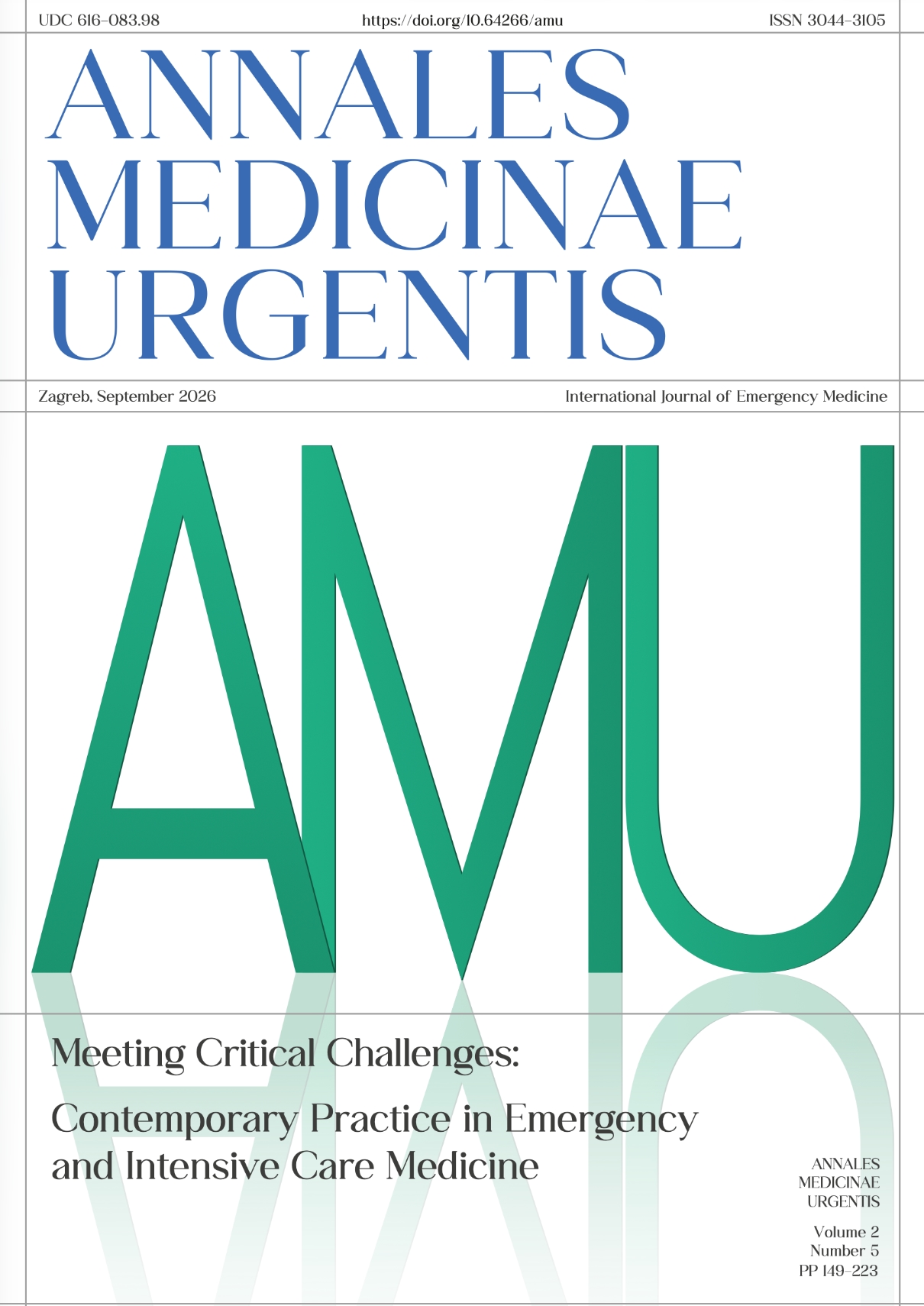
Beyond the First Response: Excellence in Emergency and Critical Care. Accurate Assessment,...
First year of publication:
2025
ISSN:
3044-4489
Frequency of publication:
2 per year
DOI
https://doi.org/10.64266/amu

Published under the Creative Commons Attribution 4.0 International License

https://creativecommons.org/licenses/by/4.0/