Introduction
Stroke is the leading cause of disability and the second leading cause of death in the world, with ischemic stroke accounting for the majority of the cases. According to current predictions, one in four people will have a stroke during their lifetime (1,2). It has been clearly confirmed that timely administration of reperfusion therapies – intravenous thrombolysis and mechanical thrombectomy – significantly improves the chances of a favourable functional outcome and reduces mortality compared to standard stroke treatment (3,4). Differences in their availability and strict time constraints present limitations in achieving their full potential (5). About 35% of stroke patients could potentially be treated with these advanced methods, but in practice, the number revolves around 8-10% due to untimely recognition of stroke symptoms and delayed hospital arrival (6). Prehospital delay therefore represents a major barrier to optimal stroke care and a significant public health challenge, contributing to preventable disability and increased healthcare burden.
The reasons for delayed recognition and seeking emergency medical help are multiple and include insufficient knowledge of stroke symptoms, misattribution of symptoms to benign conditions, fear or denial of the disease, as well as organizational and logistical obstacles such as geographical distance, lack of transportation or absence of witnesses to the event (7–12).
Prehospital delay remains a major barrier to timely reperfusion therapy in acute ischemic stroke.
Although the association between stroke severity, wake-up stroke and hospital arrival time has been described previously, region-specific evidence remains important because prehospital delay is strongly influenced by local healthcare organization, EMS coverage, geography, public awareness and referral pathways. Data from Croatia and comparable regional healthcare systems are limited (13–15). Therefore, evaluating these determinants in a Croatian regional stroke-care setting may help identify whether established predictors also apply locally and whether specific system-level patterns, such as rural–urban differences or access to reperfusion therapies, require targeted intervention.
The aim of this study was to identify factors associated with prehospital delay in patients with acute ischemic stroke in a regional healthcare setting and to evaluate their implications for improving timely access to reperfusion therapies.
Materials and methods
Study design
A retrospective observational cohort study was conducted at the Emergency Department of the University Hospital Centre Osijek, a regional stroke care provider within the Croatian healthcare system. The study was approved by the Ethics Committee of the Faculty of Medicine Osijek of the Josip Juraj Strossmayer University in Osijek (Approval number: 602-04/23-08/03; 2158-61-46-23-145) and conducted in accordance with the Declaration of Helsinki. The requirement for informed consent was waived due to the retrospective design of the study and the use of anonymized clinical data.
Patients
The study included 200 consecutive patients aged ≥ 18 years and diagnosed with acute ischemic stroke who were examined at the Emergency Department of the University Hospital Centre Osijek between 1 March 2022 and 31 May 2022. Patients with transient ischemic attack were excluded.
Methods
Data were retrieved from the hospital information system, including patient´s age, sex, place of residence and pre-existing comorbidities (hypertension, diabetes mellitus, atrial fibrillation, smoking status, coronary artery disease and previous stroke).
Patients were categorized by place of residence as either rural or urban. This classification was based on data from the Croatian Bureau of Statistics and the current administrative divisions of the Republic of Croatia (16).
Stroke severity was assessed using the National Institutes of Health Stroke Scale (NIHSS). It was defined by NIHSS as follows: 0 – no stroke symptoms, 1 to 4 – minor stroke, 5 to 15 – moderate stroke, 16 to 20 – moderate to severe stroke and 21 to 42 – severe stroke.
The time elapsed since the first appearance of stroke symptoms, i.e., “last-seen-well”, was recorded. Patients were divided into two groups: those who presented early (time elapsed ≤360 minutes) and those who presented late (>360 minutes). The 360-minute cutoff was chosen as a pragmatic threshold reflecting timely access to acute stroke evaluation and potential reperfusion pathways in a regional stroke network. However, we acknowledge that this threshold is broader than the conventional therapeutic window for intravenous thrombolysis and does not necessarily indicate optimal eligibility for all reperfusion therapies. Wake-up stroke was defined as stroke symptoms first noticed at awakening, with an unknown exact onset time. The primary outcome of interest was early hospital presentation (≤360 minutes from symptom onset), reflecting timely access to acute stroke care. Data were also collected on whether intravenous thrombolysis and/or mechanical thrombectomy were performed. A composite treatment variable, defined as receipt of any reperfusion therapy, was created to include patients who received intravenous thrombolysis, mechanical thrombectomy or both treatments. An in-hospital outcome was defined as discharge home or in-hospital death.
Statistical analysis
Categorical data were represented as absolute and relative frequencies. Numerical data were described using the median and the limits of the interquartile range. Differences in categorical variables were tested with the χ2-test. The normality of the distribution of numerical variables was tested with the Shapiro-Wilks test. Differences in numerical variables between two independent groups were tested with Mann-Whitney U test. Univariate logistic regression was used to analyse the association of individual variables with the outcome. Multivariable logistic regression analysis was subsequently conducted to identify independent factors associated with early presentation. Variables were selected a priori based on clinical relevance and potential confounding, including age, sex, NIHSS, atrial fibrillation, wake-up stroke and place of residence. Results are presented as odds ratios (ORs) for univariable analysis and adjusted odds ratios (aORs) for multivariable analysis with associated 95% confidence interval (CI). No missing data were observed for the analysed variables. All P values were two-sided. The significance level was set at Alpha = 0.05. The statistical analyses were performed with MedCalc® Statistical Software version 20.026 (MedCalc Software Ltd, Ostend, Belgium; 2022).
Results
A total of 200 patients were included in the study. The median age was 73 years (interquartile range 66-82 years). There were 97 (48.5%) patients from rural areas, while 103 (51.5%) lived in urban areas. History of atrial fibrillation was present in 53 (26.5%) patients, while stroke recurrence occurred in 51 (25.5%). With regard to the time elapsed since the onset of stroke symptoms, 77 (38.5%) patients reported within 360 minutes of the onset of symptoms, while 123 (61.5%) patients presented late. Overall, 19 patients (9.5%) received intravenous thrombolysis and 15 patients (7.5%) underwent mechanical thrombectomy. Ten patients (5.0%) received both intravenous thrombolysis and mechanical thrombectomy as bridging therapy. In total, 24 patients (12.0%) received at least one reperfusion therapy, defined as intravenous thrombolysis and/or mechanical thrombectomy. Overall, 176 patients (88%) were discharged home, whereas 24 patients (12%) died during their hospital stay (Table 1).
There were no significant differences in early presentation according to sex (P = 0.97) or place of residence (rural vs. urban, P = 0.82). However, atrial fibrillation was significantly associated with early presentation, with 52.8% of patients with atrial fibrillation arriving within 360 minutes compared to 33.3% without (P = 0.01) (Table 2).
Patients with mild strokes (NIHSS 0-4) more frequently presented after 360 minutes, while those with more severe strokes (NIHSS 16-20) presented earlier. Notably, only 16.7% of patients with NIHSS 0 presented early, in contrast to 75% of those with NIHSS scores between 16 and 20 (P = 0.006) (Table 2). Stroke severity was significantly higher among patients presenting within 360 minutes compared to those presenting late (median [interquartile range]: 6 [3.8-14] vs. 4 [2-6], P <
0.001) (Figure 1).
Thrombolysis was significantly more frequent among patients presenting within 360 minutes compared with delayed presenters (18 vs 1 patients, P < 0.001). The single patient who received thrombolysis despite being classified in the >360-minute group had wake-up stroke. Similarly, mechanical thrombectomy was performed exclusively in early presenters (15 vs 0 patients, P < 0.001). In-hospital mortality was numerically higher among early presenters than among late presenters, but this difference was not statistically significant (15.6% vs. 9.8%, P = 0.22). This finding should be interpreted in the context of higher stroke severity among early presenters, as reflected by significantly higher NIHSS scores in this group (Table 2).
In the univariable logistic regression analysis, atrial fibrillation (OR 2.26, 95% CI 1.09–4.70, P = 0.03) and higher NIHSS score (OR 1.10 per point increase, 95% CI 1.04–1.16, P = 0.001) were significantly associated with presentation within 360 minutes from symptom onset. In contrast, wake-up stroke Box-and-whisker plots show NIHSS scores in patients with early presentation (≤360 minutes) and delayed presentation (>360 minutes). The boxes represent the interquartile range, the horizontal line indicates the median, whiskers denote the range, and crosses represent mean values. Outliers are shown as individual points.
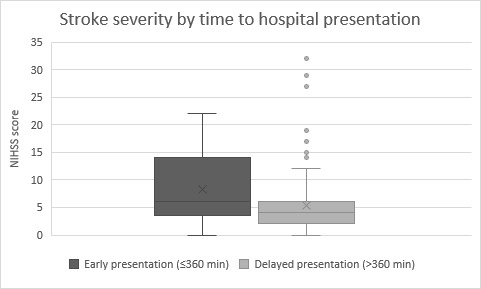
Figure 1. Stroke severity according to time to hospital presentation
was strongly associated with delayed presentation (OR 0.09, 95% CI 0.03–0.29; P<0.001) (Table 3).
In multivariable logistic regression analysis including age, sex, NIHSS score, atrial fibrillation, wake-up stroke and place of residence, a higher NIHSS score remained independently associated with early hospital presentation (aOR 1.11 per point increase, 95% CI 1.04–1.18; P=0.001). Wake-up stroke was independently associated with a markedly lower likelihood of early presentation (aOR 0.13, 95% CI 0.04–0.48; P=0.002)
(Table 4).
Discussion
In this study, early hospital presentation (≤360 minutes) was significantly associated with greater stroke severity and presence of atrial fibrillation (AF), whereas wake-up stroke was strongly associated with delayed presentation. After multivariable adjustment, higher NIHSS score and wake-up stroke remained the only independent determinants of prehospital delay.
The main findings of this study are consistent with previous evidence showing that more severe neurological deficits are associated with earlier hospital presentation, whereas wake-up stroke is associated with delayed presentation. Therefore, the primary contribution of this study is not the identification of entirely new predictors, but the confirmation and contextualization of these associations within a Croatian regional stroke-care setting, where published data remain scarce. In this cohort, only 38.5% of patients arrived within 360 minutes, while early presentation was strongly associated with access to reperfusion therapy. At the same time, no significant rural–urban difference in early presentation was observed, suggesting that, in this setting, geographical residence alone may be less important than symptom recognition and clinical presentation. These findings provide locally relevant evidence for stroke-care planning and support public health interventions focused on recognition of mild or atypical symptoms, rapid EMS activation and improved pathways for patients with wake-up stroke.
In this study, no significant differences in early presentation were observed between men and women. Recent studies indicate that the time from symptom onset to hospital arrival (onset-to-door time, ODT) in acute ischemic stroke shows modest – but consistent – differences between women and men (17,18). Factors contributing to these disparities include lower rates of emergency service use among women and a higher likelihood of living alone, both of which can delay recognition of stroke symptoms and timely medical response (19). Our findings are consistent with the evidence reported in the recent systematic review encompassing over 160,000 patients, which demonstrated that in the majority of studies, no statistically significant sex difference in pre-hospital delay for ischemic stroke was observed (20). This consistency may reflect comparable healthcare accessibility and emergency medical service (EMS) organization for men and women within the Croatian healthcare system, as well as a relatively uniform public awareness of stroke symptoms across sexes.
Recent research indicates that patients with acute ischemic stroke who live in rural areas tend to arrive at hospitals later than their urban counterparts. The study attributed much of this difference to delayed recognition of symptoms, longer ambulance-response and transport times, greater distances from stroke-ready hospitals and more frequent initial presentation to non-stroke-ready facilities in rural settings (21,22). The results of our study may be explained by the fact that all participants, regardless of whether they resided in urban or rural areas, lived relatively close to the University Hospital Centre Osijek, which is a stroke centre. This geographical proximity likely minimized differences in ODTs between groups. In addition, the Osijek EMS operates several branch stations throughout the region, which enables a timely response and facilitates rapid access to acute medical care for the local population.
In our study, conditions such as hypertension, diabetes mellitus, hyperlipidaemia, coronary artery disease and recurrent stroke did not demonstrate measurable effects on prehospital delay. This is in contrast with some previous findings suggesting that chronic disease burden may influence patients’ ability to recognize symptoms or seek timely care (23,24). On one hand, patients with chronic illness might have closer medical follow-up and higher awareness, which could favour faster recognition and hospital contact; on the other, comorbidities might impair mobility and symptom recognition or contribute to “atypical” stroke presentation, delaying decision or transport. Given the lack of consistent empirical data, such hypotheses remain speculative.
Several multicentre and registry-based analyses have observed that patients with recurrent stroke are more likely to arrive a key target for intervention, as they constitute a substantial proportion of the stroke population who are less likely to present within the therapeutic time window, but still benefit from rapid assessment.
Higher stroke severity independently predicted earlier hospital presentation, whereas wake-up stroke was associated with delayed presentation
by EMS and, in some cohorts, reach the hospital sooner than those with first-ever stroke (25). Patients who survive a prior stroke often receive education about stroke signs, maintain closer contact with health services and may have written action plans or lower thresholds for calling EMS; caregivers in these households may also recognize symptoms more rapidly. On the other hand, recurrent stroke patients may have greater disability, atypical presentations or social isolation that can delay recognition and transport in some settings (26).
Our study showed an association between early presentation and AF in univariable analysis but lost statistical significance after adjustment for stroke severity. This suggests that the effect of AF is largely mediated through more severe clinical presentation rather than directly influencing patient behaviour or healthcare access. In a 2024 retrospective cohort study comparing patients with known AF and those in whom AF was first detected after stroke, there was no statistically significant difference in stroke recognition-to-door times or in rates of prehospital stroke-code activation between the groups (27). On the other hand, a 2024 Chinese multicentre study found that a history of AF was independently associated with a higher likelihood of arriving within 3 hours of symptom onset, even after controlling for distance, mode of transport and stroke severity (28). Future studies with larger sample sizes are needed to clarify the relationship between atrial fibrillation and early presentation. Nevertheless, encouraging rapid EMS activation upon symptom onset in this high-risk population could further shorten ODT and increase the proportion of patients eligible for reperfusion therapies.
Stroke severity emerged as the strongest independent determinant of early hospital presentation. Several large, contemporary studies show that greater neurological deficit at presentation is commonly associated with shorter ODT, probably because more severe deficits produce unmistakable disability that triggers rapid help-seeking and EMS activation (29,30). Conversely, patients with low NIHSS often have subtle or non-specific complaints that are commonly misattributed to benign causes or existing chronic conditions; this reduces perceived urgency and increases reliance on non-urgent care pathways, self-management or delayed presentation (31). These apparently contradictory findings suggest that the relationship between stroke severity and ODT is context-dependent and mediated by local health-seeking behaviour, transport logistics and how stroke symptoms are interpreted by laypersons and first responders. From a public health perspective, patients with less severe presentations represent Wake-up stroke was strongly associated with delayed arrival, which is expected given the unknown symptom onset time and the use of the last-known-well concept to define onset-to-door time (32). Therefore, this finding should not be interpreted solely as a behavioural determinant of delayed help-seeking. Unlike factors such as symptom recognition, EMS activation or mode of transport, wake-up stroke is partly linked to delayed presentation by definition, because the last-known-well time usually precedes symptom discovery by several hours. In this sense, wake-up stroke represents a distinct clinical and methodological subgroup rather than a conventional modifiable determinant of prehospital delay. Its practical importance lies in the fact that conventional time-based eligibility criteria may exclude many of these patients from reperfusion therapy, despite the possibility that some may still benefit from treatment based on advanced imaging selection.
In our study, early hospital presentation was strongly associated with eligibility for advanced reperfusion therapies. Nearly one quarter of patients who presented within 360 minutes received thrombolysis and one-fifth underwent mechanical thrombectomy. On the other hand, among patients presenting beyond 360 minutes, only one patient received intravenous thrombolysis and none underwent mechanical thrombectomy. This finding highlights the important impact prehospital delay has on eligibility for time-dependent advanced stroke therapies. As mentioned above, although thrombolysis is generally limited to 4.5 hours after symptom onset, one patient in our study presented beyond 360 minutes as a wake-up stroke and received thrombolysis. However, detailed case-level imaging-selection data were not systematically captured in the retrospective dataset. Therefore, we cannot reliably determine whether thrombolysis in this case was based on CT perfusion, MRI-based mismatch assessment, or clinical reassessment by the treating stroke team. This finding should therefore be interpreted cautiously and should not be considered evidence of routine thrombolysis beyond the standard therapeutic window. Taken together, these findings emphasize that delayed presentation effectively eliminates access to reperfusion therapies for the majority of patients, representing a major barrier to optimal stroke care.
The definition of early presentation used in this study should be interpreted within the context of a pragmatic regional stroke-care pathway rather than a strict marker of optimal eligibility for reperfusion therapies. Although a 360-minute cut-off may capture patients who still require urgent acute stroke evaluation, it is broader than the conventional therapeutic window for intravenous thrombolysis. Acute stroke treatment is increasingly guided not only by time from symptom onset but also by advanced imaging selection. In selected patients, particularly those with large-vessel occlusion or wake-up stroke, CT/MR perfusion mismatch or MRI DWI-FLAIR mismatch may support reperfusion treatment beyond conventional time-based windows. The Stroke Action Plan for Europe 2018–2030 emphasizes substantially shorter treatment-related targets, including reducing median onset-to-needle time for intravenous thrombolysis and onset-to-reperfusion time for endovascular treatment (33). Its mid-term update further stresses the importance of rapid EMS activation, shorter onset-to-door times and optimized in-hospital workflows (34). Similarly, previous studies have shown that onset-to-door time within 4.5 hours is more closely aligned with better clinical outcomes and eligibility for intravenous thrombolysis (35,36). Therefore, the proportion of early presenters in our study should not be interpreted as the proportion of patients optimally eligible for intravenous thrombolysis, but rather as the proportion reaching hospital within a broader time-sensitive acute stroke pathway.
Improved recognition of mild stroke symptoms and prompt EMS activation may reduce prehospital delay and increase access to reperfusion therapies
Beyond onset-to-door time, several system-level factors may further influence access to reperfusion therapies and clinical outcomes, including prehospital stroke recognition, hospital prenotification, door-to-needle time for intravenous thrombolysis and door-to-groin time for mechanical thrombectomy (34,37). These variables reflect the efficiency of the acute stroke pathway after first medical contact and after hospital arrival. In our setting, standardized prehospital stroke scales were not routinely used during the study period, and detailed EMS and in-hospital workflow metrics were not available for analysis. Future prospective studies should therefore incorporate prehospital recognition protocols, hospital prenotification, mode of transport, door-to-needle time and door-to-groin time to provide a more comprehensive assessment of delays across the entire stroke-care pathway.
Although early presentation is generally associated with improved access to time-dependent advanced therapies (35), there was no significant difference in in-hospital mortality in our study. This likely reflects the limited sample size and higher stroke severity among patients who presented early, which may have attenuated the potential survival benefits of earlier arrival.
Several important prehospital variables were not available, including EMS activation, mode of transport, witness presence, living status and actual distance from hospital. Their omission may have introduced residual confounding, as these factors can influence both symptom recognition and time to hospital arrival. Therefore, the associations observed for NIHSS score, wake-up stroke and rural–urban residence should be interpreted within the limitations of the available retrospective dataset.
Finally, the nationwide Helicopter Emergency Medical Service became operational in Croatia in March 2024, after the period covered by this study (38). Future studies should evaluate whether this system-level intervention reduces onset-to-door times and improves access to reperfusion therapies, particularly among patients from rural or remote areas.
These findings highlight actionable targets to reduce prehospital delay, particularly through improved public awareness of mild stroke symptoms and timely EMS activation. Addressing these factors may increase the proportion of patients eligible for reperfusion therapies and consequently improve stroke outcomes.
Limitations
This study has several limitations. First, it is a single-centre retrospective study, which may limit generalizability to other healthcare settings. Second, the time to presentation was determined using the last-known-well concept, which represents standard clinical practice and is routinely used for treatment decision-making. However, it may be subject to recall bias, which may affect the accuracy of prehospital delay estimation. Third, detailed prehospital and in-hospital workflow data were not available. Specifically, EMS activation, mode of transport, hospital prenotification, door-to-needle time and door-to-groin time were not systematically recorded and therefore could not be analysed. In addition, standardized prehospital stroke scales were not routinely used in our setting during the study period. Fourth, early presentation was defined using a 360-minute threshold, which is broader than the conventional time window for intravenous thrombolysis and may overestimate timely arrival when compared with studies using 3-hour or 4.5-hour onset-to-door thresholds. Finally, wake-up stroke is inherently linked to delayed presentation due to unknown onset time, which may influence its observed association with delayed presentation. Future prospective, multicentre studies with larger sample sizes and detailed prehospital system data are needed to better address these limitations. Future prospective, multicentre studies incorporating detailed prehospital workflow metrics are needed to validate these findings and further optimize acute stroke pathways.
Conclusion
Stroke severity is the primary independent determinant of early hospital presentation with acute ischemic stroke, while wake-up stroke is strongly associated with delayed presentation. Early presentation was strongly linked to eligibility for advanced reperfusion therapies, whereas delayed presentation almost completely eliminated access to these time-dependent therapies.
These findings highlight prehospital delay as a critical barrier to optimal stroke care and the need for targeted public health education to improve stroke symptoms recognition – especially subtler presentations.This can increase the proportion of patients eligible for reperfusion therapies, improve functional outcomes and decrease overall stroke burden at the population level.
This research did not receive any specific grant from funding agencies in the public, commercial, or not-for-profit sectors.
References
- Feigin VL, Brainin M, Norrving B, Martins SO, Pandian J, Lindsay P et al. World Stroke Organization: Global Stroke Fact Sheet 2025. Int J Stroke. 2025;20:132. doi: 10.1177/17474930241308142.
- Feigin VL, Abate MD, Abate YH, ElHafeez SA, Abd-Allah F, Abdelalim A et al. Global, regional, and national burden of stroke and its risk factors, 1990–2021: a systematic analysis for the Global Burden of Disease Study 2021. Lancet Neurol. 2024;23:973–1003. doi: 10.1016/S1474-4422(24)00369-7.
- Muruet W, Rudd A, Wolfe CDA, Douiri A. Long-term survival after intravenous thrombolysis for ischemic stroke: A propensity score-matched cohort with up to 10-year follow-up. Stroke. 2018;49:607–13. doi: 10.1161/STROKEAHA.117.019889.
- Goyal M, Menon BK, Van Zwam WH, Dippel DWJ, Mitchell PJ, Demchuk AM et al. Endovascular thrombectomy after large-vessel ischaemic stroke: A meta-analysis of individual patient data from five randomised trials. Lancet. 2016;387:1723–31. doi: 10.1016/S0140-6736(16)00163-X.
- Bakka AG, Patil SS, Rachakonda B, Patil A, Bolleddula J, Nandyala PSKR, et al. Breaking barriers in stroke therapy: Recent advances and ongoing challenges. Cureus. 2025;17:e78288. doi: 10.7759/cureus.78288.
- Vatsalis T, Papadopoulos D, Georgousopoulou V, Bostantzis P, Rudolf J. Global awareness and response to early symptoms of acute stroke: A systematic literature review. Cureus. 2025;17:e78420. doi: 10.7759/cureus.78420.
- Iversen AB, Blauenfeldt RA, Johnsen SP, Sandal BF, Christensen B, Andersen G et al. Understanding the seriousness of a stroke is essential for appropriate help-seeking and early arrival at a stroke centre: A cross-sectional study of stroke patients and their bystanders. Eur Stroke J. 2020;5:351–61. doi: 10.1177/2396987320945834.
- Wu X, Zhou Q, Jiang X, Fan F, Wang W, Wang J et al. Stroke knowledge and attitudes influence early hospital arrival in acute ischemic stroke: A multicenter cross-sectional survey from Hubei Province, China. Front Neurol. 2025;16:1669361. doi: 10.3389/fneur.2025.1669361.
- Hassan MS, Yucel Y. Factors influencing early hospital arrival of patients with acute ischemic stroke, cross-sectional study at teaching hospital in Mogadishu Somalia. J Multidiscip Healthc. 2022;15:2891–9. doi: 10.2147/JMDH.S392922.
- Kim YS, Park SS, Bae HJ, Cho AH, Cho YJ, Han MK et al. Stroke awareness decreases prehospital delay after acute ischemic stroke in Korea. BMC Neurol. 2011;11:2. doi: 10.1186/1471-2377-11-2.
- Sobral S, Taveira I, Seixas R, Vicente AC, Duarte J, Goes AT et al. Late hospital arrival for thrombolysis after stroke in Southern Portugal: Who is at risk? J Stroke Cerebrovasc Dis. 2019;28:900–5. doi: 10.1016/j.jstrokecerebrovasdis.2018.12.009.
- Wang R, Wang Z, Yang D, Wang J, Gou C, Zhang Y et al. Early hospital arrival after acute ischemic stroke is associated with family members’ knowledge about stroke. Front Neurol. 2021;12:652321. doi: 10.3389/fneur.2021.652321.
- Kadojić D, Novosel D, Rostohar Bijelić B, Kadojić M.Vrijeme kašnjenja pacijenata s moždanim udarom na osječkom području. Medicinski vjesnik. 2010;42:11–5.
- Svjetski dan moždanog udara 2025. Hrvatski zavod za javno zdravstvo [Internet]. [cited 2025 Nov 20]. Available from: dan-mozdanog-udara-2025/
- Vuletić V, Dikanović M, Lezaić Z, Sapina L, Kadojić D. Are we ready for intravenous thrombolysis in acute stroke treatment in our region? Acta Clin Croat. 2011;50:145-8
- Zakon o područjima županija, gradova i općina u Republici Hrvatskoj [Internet]. [cited 2025 Nov 20]. Available from: sluzbeni/2006_07_86_2045.html
- Ali M, Van Der Meij A, Van Os HJA, Ali M, Van Zwet EW, Spaander FHM et al. Sex differences in onset to hospital arrival time, prestroke disability, and clinical symptoms in patients with a large vessel occlusion: A MR CLEAN Registry substudy. J Neurointerv Surg. 2022;15:019670. doi: 10.1136/jnis-2022-019670.
- Gasbarrino K, Di Iorio D, Daskalopoulou SS. Importance of sex and gender in ischaemic stroke and carotid atherosclerotic disease. Eur Heart J. 2022;43:460–473c. doi: 10.1093/eurheartj/ehab756.
- Naveed H, Almasri M, Kazani B, Nauman A, Akhtar N, Singh R et al. Women and stroke: disparities in clinical presentation, severity, and short- and long-term outcomes. Front Neurol. 2023;14:1147858. doi: 10.3389/fneur.2023.1147858.
- Potisopha W,Vuckovic KM, DeVon HA, Park CG, Hershberger PE. Sex differences in prehospital delay in patients with acute stroke: A systematic review. J Cardiovasc Nurs. 2020;35:E77–88. doi: 10.1097/JCN.0000000000000715.
- Nasreldein A, Walter S, Mohamed KO, Shehata GA, Ghali AA, Dahshan A et al. Pre- and in-hospital delays in the use of thrombolytic therapy for patients with acute ischemic stroke in rural and urban Egypt. Front Neurol. 2023;13:1070523. doi: 10.3389/fneur.2022.1070523.
- Ungerer MN, Busetto L, Begli NH, Riehle K, Regula J, Gumbinger C. Factors affecting prehospital delay in rural and urban patients with stroke: a prospective survey-based study in Southwest Germany. BMC Neurol. 2020;20:441. doi: 10.1186/s12883-020-01999-4.
- Srinivasa SK, Basavegowda M, Chakrashali SB, Manjunath SB, Manivasagan MS. Determinants of the time period from stroke onset to arrival at the emergency department: a GIS integrated hospital-based cross-sectional study. Sci Rep. 2025;15:12726. doi: 10.1038/s41598-025-95371-6.
- Delord M, Sun X, Learoyd A, Curcin V, Wolfe C, Ashworth M et al. Patient-oriented unsupervised learning to uncover the patterns of multimorbidity associated with stroke using primary care electronic health records. BMC Prim Care. 2024;25:419. doi: 10.1186/s12875-024-02636-6.
- Dymm BL, Kwicklis M, Meurer WJ, Shi X, Lisabeth LD. Recurrent stroke arrival time. J Stroke Cerebrovasc Dis. 2023;32:107069. doi: 10.1016/j.jstrokecerebrovasdis.2023.107069.
- Xu ZX, Liu QH, Zhang XP, Deng CS,Wan LH. Factors associated with prehospital delay in acute ischemic stroke: A comparative study of first-time and recurrent cases. West J Nurs Res. 2025;47:751–63. doi: 10.1177/01939459251340778.
- Magriço M, Serôdio M, Ramos JN, Ventura R, Sobral-Pinho A, Marto JP et al. Are we missing an opportunity? Prehospital delay in patients with acute ischemic stroke and known atrial fibrillation. Rev Port Cardiol. 2024;43:321–5. doi: 10.1016/j.repc.2023.11.005.
- Liao Y, Qi W, Li S, Shi X, Wu X, Chi F et al. Analysis of onset-to-door time and its influencing factors in Chinese patients with acute ischemic stroke during the 2020 COVID-19 epidemic: A preliminary, prospective, multicenter study. BMC Health Serv Res. 2024;24:615. doi: 10.1186/s12913-024-11088-8.
- Matsuo R, Yamaguchi Y, Matsushita T, Hata J, Kiyuna F, Fukuda K et al. Association between onset-to-door time and clinical outcomes after ischemic stroke. Stroke. 2017;48:3049–56. doi: 10.1161/STROKEAHA.117.018132.
- Su Y, Qi W, Yu Y, Zhu J, Shi X, Wu X et al. Analysis of prehospital delay in acute ischaemic stroke and its influencing factors: a multicentre prospective case registry study in China. Stroke Vasc Neurol. 2025;10:e003535. doi: 10.1136/svn-2024-003535.
- Tanaka K, Matsumoto S, Nakazawa Y, Yamada T, Sonoda K, Nagano S et al. Delays in presentation time under the COVID-19 epidemic in patients with transient ischemic attack and mild stroke: A retrospective study of three hospitals in a Japanese prefecture. Front Neurol. 2021;12:748316. doi: 10.3389/fneur.2021.748316.
- Berge E, Whiteley W, Audebert H, Marchis GM De, Fonseca AC, Padiglioni C et al. European Stroke Organisation (ESO) guidelines on intravenous thrombolysis for acute ischaemic stroke. Eur Stroke J. 2021 Mar;6:I–LXII. doi:10.1177/2396987321989865.
- Norrving B, Barrick J, Davalos A, Dichgans M, Cordonnier C, Guekht A et al. Action plan for stroke in Europe 2018-2030. Eur Stroke J. 2018 Dec;3:309–36. doi:10.1177/2396987318808719.
- Christensen H, Pezzella FR, Roaldsen MB, Tomek A, Wilkie A, Christensen L et al. Stroke action plan for Europe 2018-2030 (SAP-E): mid-term review and update. Eur Stroke J. 2026;11:aakaf026. doi:10.1093/ESJ/AAKAF026.
- Lee EJ, Kim SJ, Bae J, Lee EJ, Kwon OD, Jeong HY et al. Impact of onset-to-door time on outcomes and factors associated with late hospital arrival in patients with acute ischemic stroke. PLoS One. 2021;16:e0247829 doi:10.1371/JOURNAL.PONE.0247829.
- Anees A, Panicker P, Iype T, Sreelekha KR. Assessment of onset-to-door time in acute ischemic stroke and factors associated with delay at a tertiary care center in South India. J Neurosci Rural Pract. 2024;15:86–94. doi:10.25259/JNRP_325_2023.
- Kimbrell J, Shekhar AC, Stebel J, Poke D, Geldner J, Kreinbrook J et al. Prehospital notification in acute stroke: a retrospective cohort study. Proc (Bayl Univ Med Cent). 2025;38:622–5. doi:10.1080/08998280.2025.2514984.
- HZHM | Helikopterska hitna medicinska služba [Internet]. [cited 2026 Jun 17]. Available from: